The short answer
All four combine long-term care benefits with life insurance or an annuity, so money goes to your family if you never need care. They differ in how benefits are paid (reimbursement of bills vs. cash), how long benefits can last, what happens if you want your money back, and who they're built for, such as couples or people funding with an old annuity.
At a glance
| Product family | Built on | How it's known |
|---|---|---|
| OneAmerica Asset Care / Annuity Care | Whole life insurance or a fixed annuity | Long track record; accepts 1035 exchanges from life insurance and annuities; options for couples and for extended benefit periods |
| Nationwide CareMatters | Fixed-premium universal life, or a fixed annuity | Cash indemnity benefits with no monthly bills to submit; family caregivers permitted; a shared-pool version for couples |
| Lincoln MoneyGuard | Universal life (Fixed Advantage) or variable universal life (Market Advantage) | Sold since 1988; return-of-premium options; a market-linked version |
| Securian SecureCare | Whole life, and universal life in California | Guarantees on benefits and return of premium; cash indemnity in the universal life version |
About this comparison: descriptions are general education based on information each insurer publishes. They aren't an advertisement, recommendation, or offer of any product, and they don't describe every feature or limitation. Product names are trademarks of their respective companies. Ask for the insurer's current product guide and illustration for your state.
OneAmerica Asset Care and Annuity Care
OneAmerica's Care Solutions products use either a whole life policy (Asset Care) or an annuity (Annuity Care) as the foundation, with long-term care benefits on top. Because they accept 1035 exchanges from existing life insurance and annuities, they're often used to reposition an old policy or annuity into long-term care protection. See 1035 exchanges for long-term care.
Ask about: how long benefits last, single-pay vs. multi-pay options, joint coverage for couples, and inflation protection.
Nationwide CareMatters
Nationwide's CareMatters products pay a cash indemnity benefit. Once a claim is approved, there are no monthly bills or receipts to submit, and Nationwide places no restrictions on how the money is used. Informal caregivers, including family members, are permitted. CareMatters II is built on fixed-premium universal life, CareMatters Together offers a shared pool for couples, and CareMatters Annuity uses a deferred fixed annuity.
Ask about: the benefit period (CareMatters II offers 2 to 7 years), inflation options, and what's left for beneficiaries after claims.
Lincoln MoneyGuard
MoneyGuard policies are life insurance with a long-term care rider. MoneyGuard Fixed Advantage is universal life with guaranteed benefits, and offers return-of-premium choices made at purchase. MoneyGuard Market Advantage is variable universal life, so benefits can grow with the investments you choose, with a guaranteed minimum. Market Advantage isn't available in every state.
Ask about: which return-of-premium option fits, how benefits are paid, and how market performance could change benefits.
Securian SecureCare
Securian's SecureCare line combines life insurance with qualified long-term care benefits. SecureCare Universal Life, available in California, pays cash indemnity benefits and includes guarantees on the death benefit and return of premium. Securian's whole life version is offered in other states, with availability varying.
Ask about: which version is available in your state, cash vs. reimbursement benefits, and international coverage if you travel or may live abroad.
Questions to ask about any hybrid
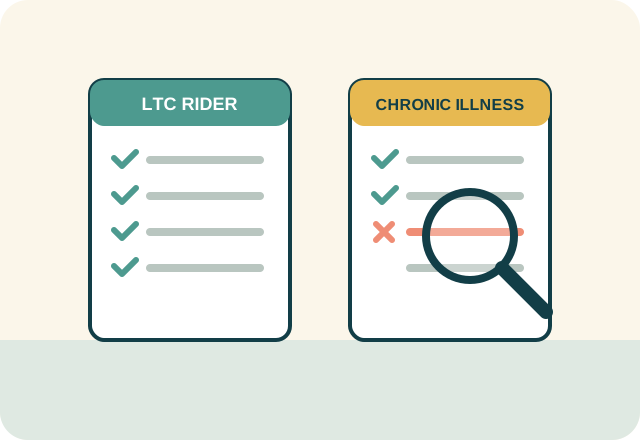
- Is the long-term care benefit a qualified 7702B rider, or a chronic illness rider? See the difference.
- Does it reimburse bills or pay cash? Can it pay family caregivers?
- How long do benefits last, and is there inflation protection?
- What do I get back if I cancel, and what does my family get if I never need care?
- Are premiums guaranteed?
More in questions to ask an advisor.
Common questions
What is the best hybrid long-term care policy?
It depends on your goals. Cash benefits suit people who want family caregivers paid simply; 1035-friendly policies suit people repositioning an old annuity or life policy; shared-pool policies suit couples. Comparing several companies for your situation is the only way to know.
What is the difference between indemnity and reimbursement?
A reimbursement policy pays your actual care bills up to a limit. An indemnity (cash) policy pays a set amount once you qualify, without monthly receipts.
Can I use an old annuity to buy long-term care coverage?
Often, yes. Some hybrid policies accept 1035 exchanges from annuities, and long-term care benefits from qualified products can be received tax-free. See using an annuity or life insurance for care.