The short answer
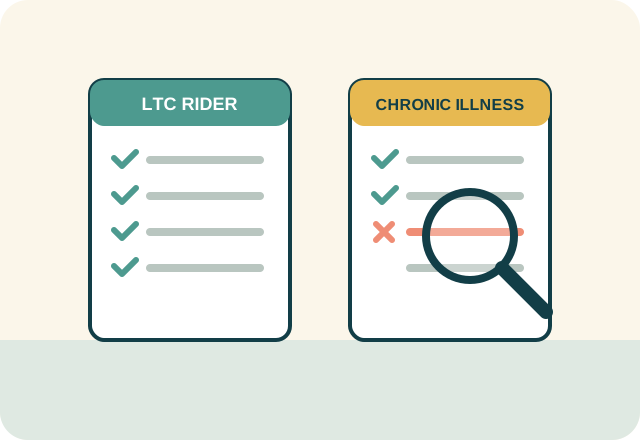
A long-term care rider is qualified long-term care insurance under tax code section 7702B and generally covers temporary and permanent care needs. A chronic illness rider falls under section 101(g) and many require that the condition be expected to be permanent. Some also reduce what they pay through a discount at claim time. If you're counting on a rider for long-term care, find out which kind you have.
Side by side
| Long-term care rider | Chronic illness rider | |
|---|---|---|
| Tax code section | 7702B (qualified long-term care) | 101(g) (accelerated death benefit) |
| Benefit trigger | Need help with 2 of 6 daily activities for 90+ days, or severe cognitive impairment | Similar triggers, but many riders require the condition to be expected to be permanent |
| Temporary care needs | Generally covered, such as recovery after a stroke or surgery | Often not covered, unless the rider specifically allows it |
| Cost | Usually an explicit rider charge | Often "free" up front, with a discount or lien applied to benefits at claim time |
| Consumer protections | Long-term care insurance rules, agent training requirements | Life insurance rules; fewer long-term care protections |
| Can be called "long-term care"? | Yes | Generally not marketed as long-term care |
Why "expected to be permanent" matters
Imagine a 70-year-old who has a stroke and needs help with bathing and dressing for a year, then recovers. A long-term care rider would typically pay during that year. A chronic illness rider that requires a permanent condition might not, because the doctor expected improvement.
Much long-term care is like this: rehab after a fall, recovery from surgery, a long illness that improves. Those are exactly the situations families expect coverage to help with.
The "free" rider and the discount
Many chronic illness riders have no up-front charge. Instead, when you file a claim, the insurer reduces the benefit it pays, often using an actuarial discount or a lien against the death benefit. The result can be much less money for care than the face amount suggests. Ask for an illustration showing what the rider would actually pay at different ages.
How to tell which rider you have
- Look at the rider's title in your policy. "Accelerated Death Benefit for Chronic Illness" usually means a 101(g) rider. "Long-Term Care Rider" or "Long-Term Care Benefits Rider" usually means 7702B.
- Search the rider for "permanent" or "for the rest of the insured's life."
- Check for a discount or lien section explaining how benefits are reduced.
- Ask the insurer in writing: "Is this rider a tax-qualified long-term care insurance rider under section 7702B?"
Is a chronic illness rider ever a good choice?
It can be a helpful extra, especially when it costs little or nothing and you mainly want life insurance. It shouldn't be mistaken for a long-term care plan. If long-term care is a real concern, compare it with a true long-term care rider or a hybrid life and long-term care policy.
Common questions
What is the difference between a chronic illness rider and a long-term care rider?
A long-term care rider is qualified long-term care insurance under section 7702B and generally covers temporary and permanent needs. A chronic illness rider is an accelerated death benefit under section 101(g); many require a permanent condition and may discount benefits at claim time.
Does a chronic illness rider pay for home care?
Chronic illness riders usually pay a cash amount you can use as you choose, including for home care, once you qualify. The bigger question is whether you qualify, since many require the condition to be permanent.
Is a chronic illness rider worth it?
It can be a useful add-on to life insurance, especially at little or no cost. It isn't a substitute for long-term care insurance if you're relying on it to pay for care.