The short answer
Caregiving and working are now the same life for millions of people. FMLA may give you up to 12 weeks of unpaid, job-protected leave to care for a parent with a serious health condition, some states add paid family leave, and many employers offer flexible schedules or caregiver benefits. Ask about them before you need them.
How common is it?
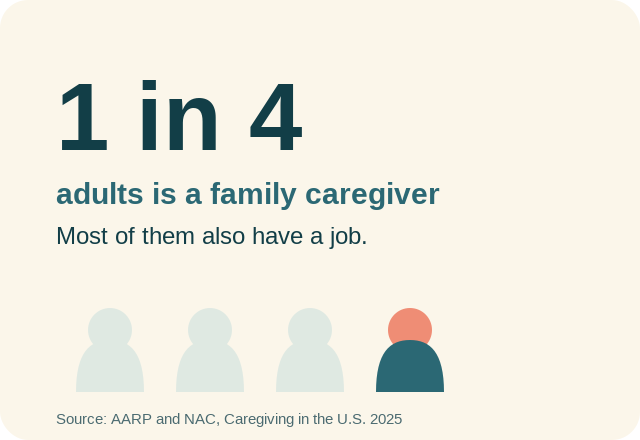
AARP and the National Alliance for Caregiving report that about 63 million Americans, nearly 1 in 4 adults, provided ongoing care to an adult or child with a medical condition or disability in the past year, up about 20 million since 2015. Roughly seven in ten caregivers of working age are employed. Many of them describe disruptions at work, and access to supportive benefits is much better for salaried workers than for hourly workers.
The same research found that almost half of family caregivers report at least one negative financial effect, such as reduced pay or unpaid bills. Working caregivers are not an unusual group. They are a large share of every workplace.
What may be available at work
- FMLA leave: eligible employees can take up to 12 weeks a year of unpaid, job-protected leave to care for a parent, spouse or child with a serious health condition. It generally applies to employers with 50 or more employees, and you must have worked there 12 months and 1,250 hours. Leave can sometimes be taken in pieces.
- State paid family leave: a number of states pay part of your wages during caregiving leave. Rules, pay rates and waiting periods differ, so check your state labor department.
- Flexible schedule or remote work: often the most useful and the easiest to arrange informally.
- Employee assistance programs (EAP): many include free counseling and referrals to local care resources.
- Dependent care accounts and caregiver benefits: some employers help with backup care or care navigation. Ask HR what exists, because these are not always advertised.
Hourly and small-employer workers are the most likely to fall outside FMLA and employer benefits. If that is you, the local Area Agency on Aging (Eldercare Locator) is a good place to ask about respite and caregiver support.
Before a crisis
- Learn your employer's policy. Read the leave and flexible work sections of the handbook, and note who to call.
- Talk to your parent early. Know who their doctors are and where the key papers are. Our guide to talking with your parents can help start it.
- Split the load. A written family caregiving plan keeps one sibling from carrying everything.
- Know what can pay. Some programs and private agreements can pay a family caregiver, and some costs may be tax-deductible.
- Check your own coverage. If you have long-term care insurance through work, find out whether you can keep it if you leave the job.
If you are thinking of cutting back or quitting
It is a real option for some families, but it carries costs: lost income, lost retirement contributions and lost Social Security credits. Compare it against paid help, respite, and a written agreement before deciding, and check what leave or flexibility your employer can offer first.
Common questions
Can my employer fire me for taking time off to care for a parent?
If you qualify for FMLA, your job is protected during approved leave. Without FMLA, protection depends on your employer and your state. Put your request in writing and ask HR about your options.
Is FMLA leave paid?
No. FMLA leave is unpaid, although you may be able to use accrued vacation or sick time, and some states have paid family leave programs that replace part of your pay.
What if my company has fewer than 50 employees?
FMLA generally does not apply, but some states and cities have their own leave laws that cover smaller employers. Ask your state labor department.