The short answer
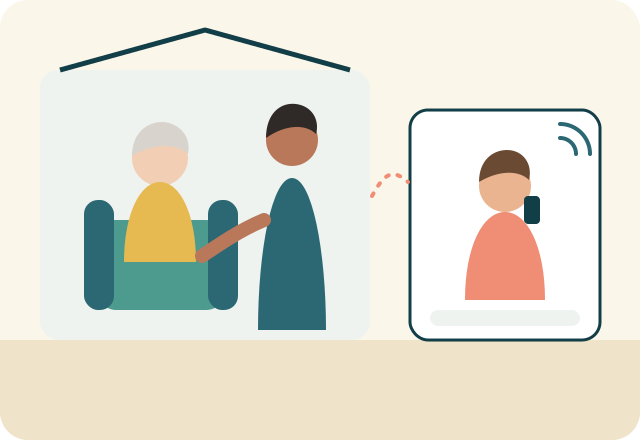
Care coordination (sometimes called concierge or care advocacy) is a service built into many long-term care and hybrid policies. A licensed professional, often a nurse or social worker, assesses needs, builds a plan of care, helps arrange services, and checks in over time. Some insurers add networks of vetted providers with discounted rates. Call the insurer's claims or care line as soon as care is on the horizon, even before you file a claim.
What these services usually include
Needs assessment
A licensed professional talks with the policyholder and family, often visits, and documents what help is needed.
A written plan of care
Recommended services, care setting, and hours, matched to what the policy covers.
Finding providers
Lists of home care agencies, adult day programs, and facilities, sometimes from a vetted network with special pricing.
Ongoing support
Check-ins as needs change, help for family caregivers, and guidance through claim paperwork.
Examples from insurers
| Insurer | Service | What it offers |
|---|---|---|
| Mutual of Omaha | Care coordination benefit (built into its MutualCare policies) | When a claim starts, a licensed health care professional is assigned to assess needs, develop a plan of care, help arrange services, and monitor progress and quality. No waiting period applies to care coordination, and you're free to choose your own providers. |
| OneAmerica | Care Benefit Concierge (Asset Care and Annuity Care hybrids) | A personal concierge from day one of a claim, at no extra cost. Helps confirm that care and providers qualify before services begin, handles claims and billing support, and adds care coordination through CareScout. |
| Genworth | CareScout Care Advocate Team and CareScout Quality Network | Genworth long-term care policyholders can get help finding care from CareScout advocates, plus a nationwide network of vetted home care agencies that offer special pricing. |
| John Hancock | Find Care tool (through CareScout) | Long-term care policyholders and owners of life policies with an LTC rider get complimentary access to a network of vetted home care agencies with discounted rates and a team that helps find providers. |
| Lincoln Financial | Lincoln Concierge Care Coordination (MoneyGuard hybrids) | Help planning for care, support for family and informal caregivers, help organizing professional services, and assistance with the claims process, available to policyholders before a claim. |
| Nationwide | Extended-care resources for CareMatters policyholders | Resources to search and compare local care providers, from home health care and adult day care to memory care. |
Spotlight: OneAmerica's Care Benefit Concierge
OneAmerica, which sells the Asset Care and Annuity Care hybrid policies, assigns policyholders a personal Care Benefit Concierge when a long-term care need begins. Families get one person to call instead of a claims department.
What the concierge does
Guides the family from the first call, confirms that the planned services and providers qualify under the policy before money is spent, and helps with claims and billing. Since 2020, OneAmerica has added care coordination through CareScout to help find and arrange care.
Why it's a good benefit
The most expensive mistakes happen early: hiring a provider the policy won't pay, or missing paperwork that delays benefits. A dedicated concierge helps prevent both, at no extra cost, while the family focuses on the person who needs care.
OneAmerica has also worked with Amada Senior Care to support family caregivers. Concierge services are a company practice, not a contract guarantee, so they can change. Ask for current details when you compare policies.
Why it matters
- Faster, smoother claims. A care coordinator knows what documentation the insurer needs.
- Benefits that last longer. Network discounts on home care mean the same benefit pays for more hours.
- Access to extra benefits. Some policies require a care coordinator's recommendation to unlock alternate-care benefits, such as home modifications or a medical alert system.
- Less stress on family. Someone who does this every day helps sort out options when everyone is overwhelmed.
How to use these services
- Find the policy's customer service or claims number and ask: "What care coordination or care advocacy services come with this policy?"
- Call as soon as care looks likely, such as after a hospital stay or a new diagnosis, not after months of paying out of pocket.
- Make sure the policyholder has authorized family members to speak with the insurer.
- Ask whether using a network provider affects price or claim processing, and whether you can still choose your own provider.
Shopping for a policy? Ask what care coordination services are included and when you can use them. It's one of the most overlooked differences between companies.
Common questions
What is care coordination in long-term care insurance?
A service in many policies where a licensed professional, often a nurse, assesses your needs, creates a plan of care, helps arrange services, and monitors care over time.
Does using care coordination reduce my benefits?
Rules vary by policy. In many policies the service is built in and doesn't require meeting the waiting period. Ask the insurer how it's paid for under your contract.
Do I have to use the insurer's recommended providers?
Usually not. You can generally choose your own qualified providers, though network providers may offer discounts.
What is OneAmerica's Care Benefit Concierge?
A free service for OneAmerica long-term care policyholders. A personal concierge helps confirm which care and providers qualify, supports claims and billing, and connects families to care coordination.
What is the CareScout Quality Network?
A network of vetted home care agencies, created by Genworth's CareScout, that offers special pricing to eligible long-term care policyholders, including Genworth and John Hancock customers.